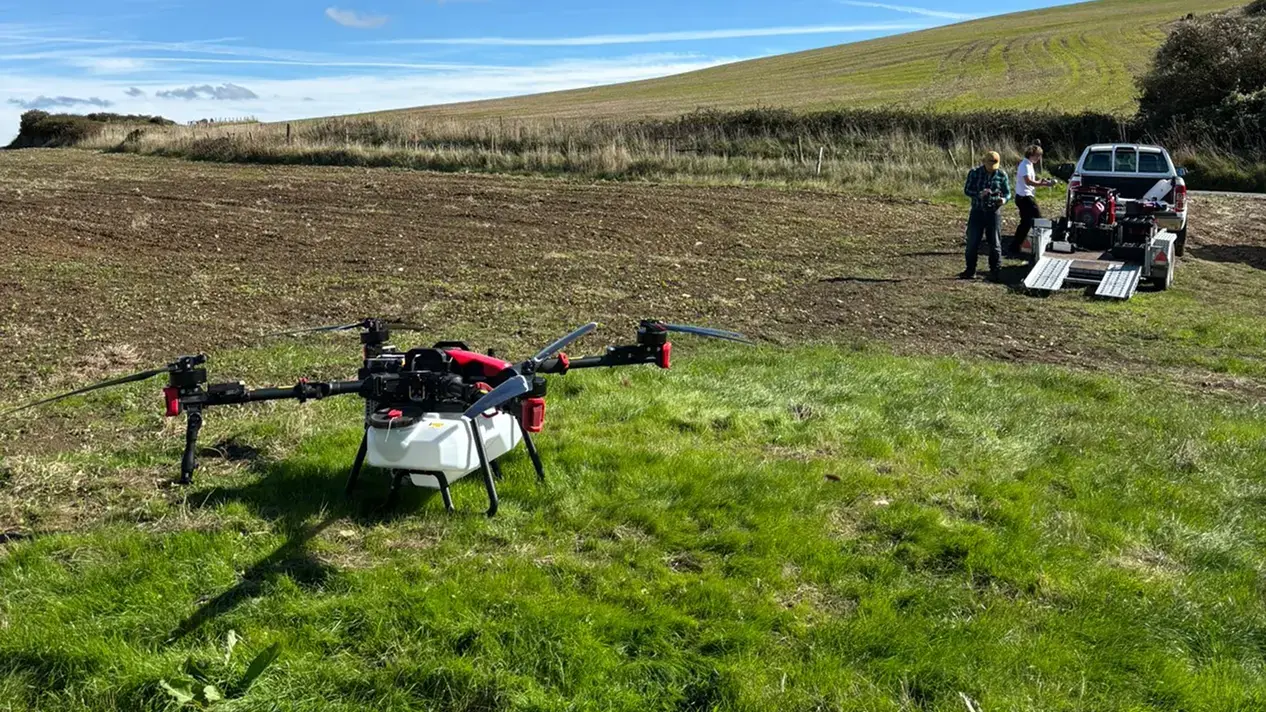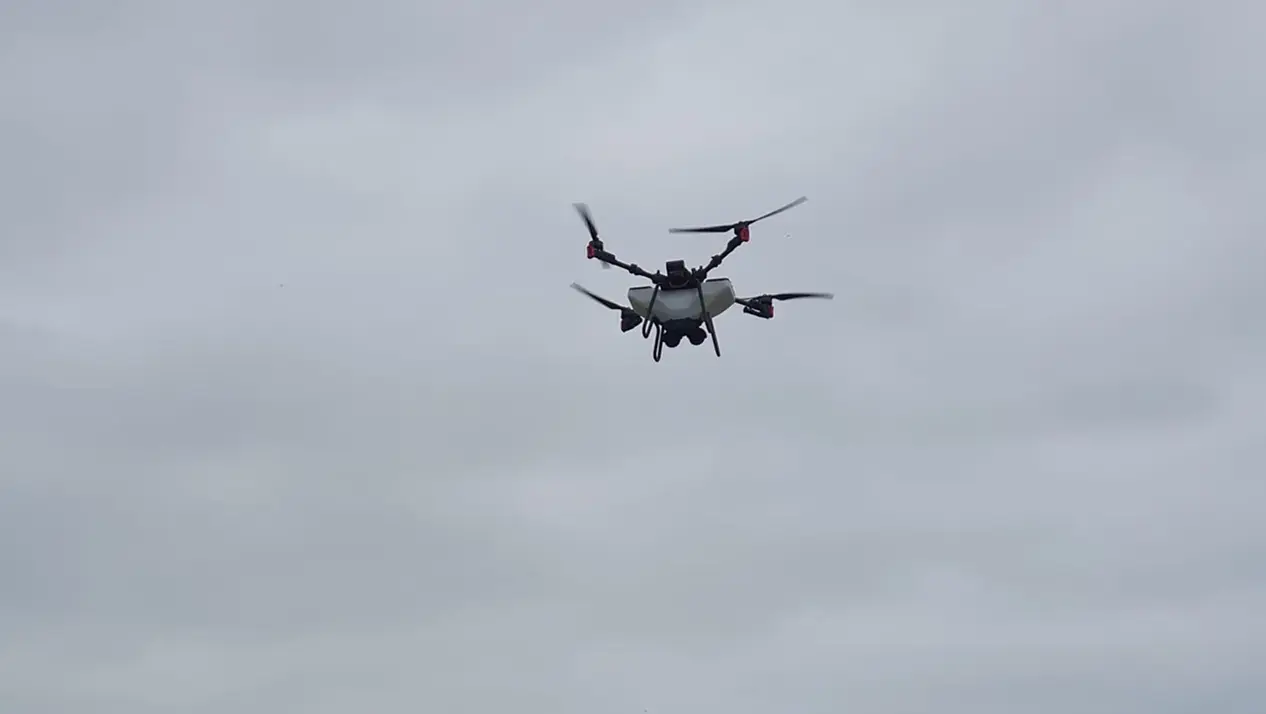
UK arable farmers can cut fertiliser costs in 2026 by combining Soil Mineral Nitrogen testing with RB209 recalibration, adopting variable rate application informed by drone multispectral imaging, and commissioning precision drone application to eliminate compaction losses and timing delays. These five methods have delivered nitrogen savings of 58–69 kg N/ha in UK wheat trials without reducing yields.
Between February and late March 2026, fertiliser prices rose 13–36% across ammonium nitrate (AN), urea, and UAN. The drivers aren't going away — the EU's Carbon Border Adjustment Mechanism (CBAM) is already adding pressure, and the UK's own CBAM arrives in January 2027.
For a 200-hectare arable farm applying 180 kg N/ha to 100 hectares of winter wheat, the nitrogen bill alone now sits somewhere around £23,500 at current AN prices. That's before a single pass of the spreader has burned a litre of diesel.
Here's the problem most growers face: cutting fertiliser blindly costs yield, but applying at last year's flat rate bleeds margin. There's a gap between those two options — and it's wider than most people realise. Five levers are available to UK arable farmers right now, ranging from soil science basics that cost £20 to precision technology that requires zero capital outlay. The most powerful one is the lever most growers haven't pulled yet.
Why 2026 is the Year to Act on Fertiliser Efficiency
The price picture right now
AHDB's GB fertiliser price data confirms the scale of the problem. AN prices have climbed into the £450–500/t range, and that's before haulage. At 34.5% nitrogen content, that puts the cost of each kilogram of applied N at roughly £1.30–£1.45.
The EU CBAM came into force in January 2026, adding a carbon levy to imported fertiliser. The UK version is expected to follow in January 2027. This isn't a spike — it's a structural shift. Fertiliser will not return to 2021 prices because the carbon cost is now permanently baked into the supply chain.
What does that mean at field level? Take that 200-hectare farm again. If you're applying the standard 180 kg N/ha across your wheat area, you're buying roughly 52 tonnes of AN. At £475/t, that's £24,700 on nitrogen alone for one crop in the rotation. Every kilogram you can save without touching yield goes straight to margin.
Why flat-rate applications are costing you more than the bill shows
Here's what most people miss. AHDB data shows UK arable nitrogen use efficiency (NUE) averages just 50–60%. That means up to half the nitrogen you spread is lost to leaching, volatilisation, or simply sitting in the soil unused by the crop.
Wasted nitrogen is a double cost — you pay for it and you don't get the yield from it. It's like filling your grain trailer with a hole in the floor. You know the weight going in, but you're not measuring what's falling out the bottom.
The economic optimum nitrogen rate shifts significantly as the break-even ratio changes. What was the right rate when AN cost £280/t is over-application at £475/t. AHDB's RB209 guidance accounts for this — but only if you actually recalculate. Most growers haven't updated their figures since 2024.
Way 1 — Start With the Soil, Not the Bag
Soil Mineral Nitrogen (SMN) testing as a 2026 baseline
The simplest cost-saving lever in arable farming is the one that requires the least technology: find out what's already in the ground before you add more.
A Soil Mineral Nitrogen test quantifies the plant-available N already in the soil profile. After a wet winter — which much of the UK experienced in 2025/26 — residual nitrogen levels vary enormously from field to field and even within fields. One field might have 40 kg N/ha sitting there for free. The next one might have 15.
AHDB and FACTS advisers recommend SMN tests for high-nitrogen-demand crops like winter wheat and oilseed rape (OSR), particularly after variable winters. The cost is typically £10–20 per sample. The payback on a single application decision — in a field that tests high — is often £30–60/ha or more at 2026 prices.
The RB209 2026 recalibration
AHDB's nitrogen adjustment calculator now accommodates fertiliser prices up to £1,300/t. Before placing your spring order, it's worth running your planned rates through it. The calculator adjusts the economic optimum based on current grain and fertiliser prices — and for many farms, the optimal rate in 2026 is meaningfully lower than the rate they applied in 2024.
This isn't about cutting corners. It's about not spending money on nitrogen the crop can't use profitably at today's prices.
Way 2 — Move to Variable Rate Nitrogen Applications
What Variable Rate Application (VRA) actually means on a UK farm
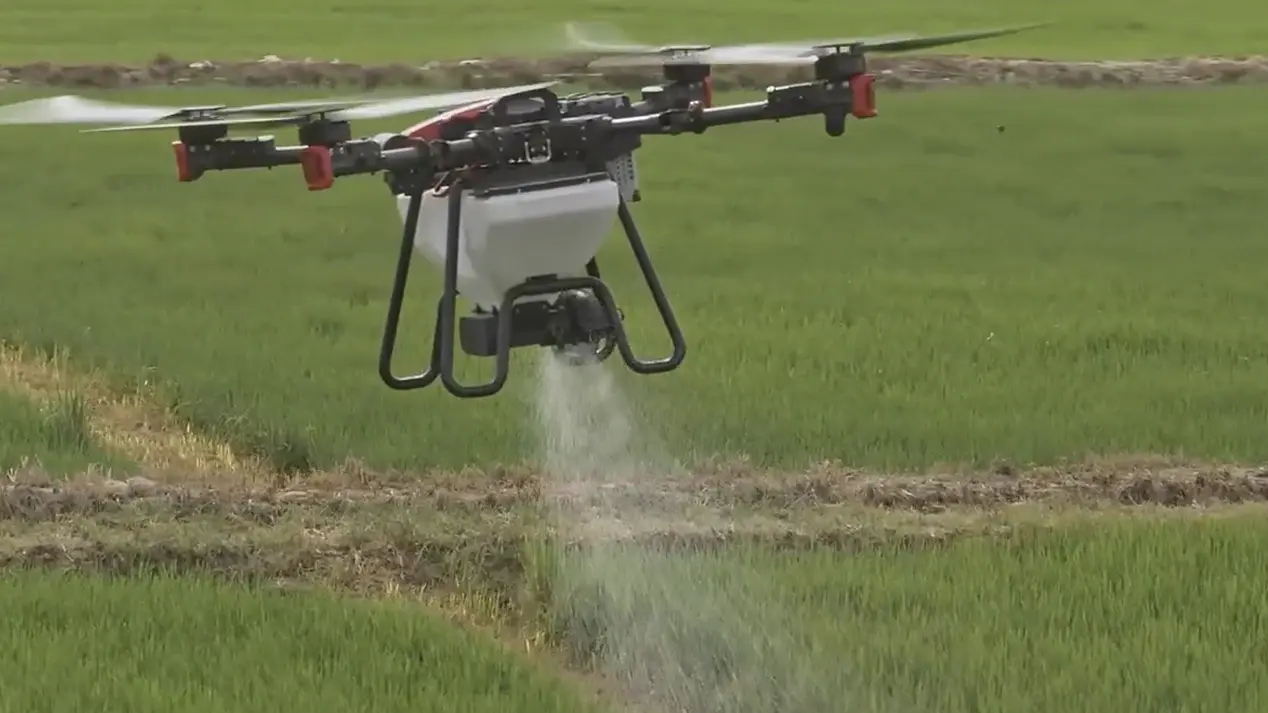
Instead of spreading 180 kg N/ha uniformly across an entire field, variable rate application adjusts the dose zone by zone based on crop biomass, historic yield maps, or in-season sensor data.
In-season NDVI (Normalised Difference Vegetation Index) or Green Area Index (GAI) data identifies which parts of a field are carrying a thick, high-demand canopy and which parts are thin and low-demand. The thick patches get more nitrogen. The thin patches get less. Total spend drops, but yield holds — because you're matching the input to the crop's actual need, not guessing with a flat average.
This isn't theoretical. The Revesby Estate trial in Lincolnshire — run as part of Agrii's Digital Technology Farm programme at Harvest 2025 — achieved 70% nitrogen use efficiency on lighter soils with 37% less N spend compared to the standard approach. The result? A 26% higher gross margin overall.
The maths on variable rate vs. flat rate
Now here's the thing — the numbers are hard to argue with. Take a 100-hectare wheat block:
| Flat Rate | VRA-Informed | |
|---|---|---|
| Application rate | 180 kg N/ha uniform | 140–200 kg N/ha by zone |
| Total N purchased | 18,000 kg N | ~15,200 kg N (avg. 152 kg N/ha) |
| AN required (34.5% N) | 52.2 tonnes | 44.1 tonnes |
| Cost at £475/t AN | £24,795 | £20,948 |
| Saving | — | £3,847 |
That's nearly £4,000 saved on a single crop across 100 hectares. And the Revesby data shows yield held or improved because the nitrogen went where the crop actually needed it.
Way 3 — Use Drone Multispectral Imaging to Build Your N Maps
What a drone survey tells you that satellite imagery cannot
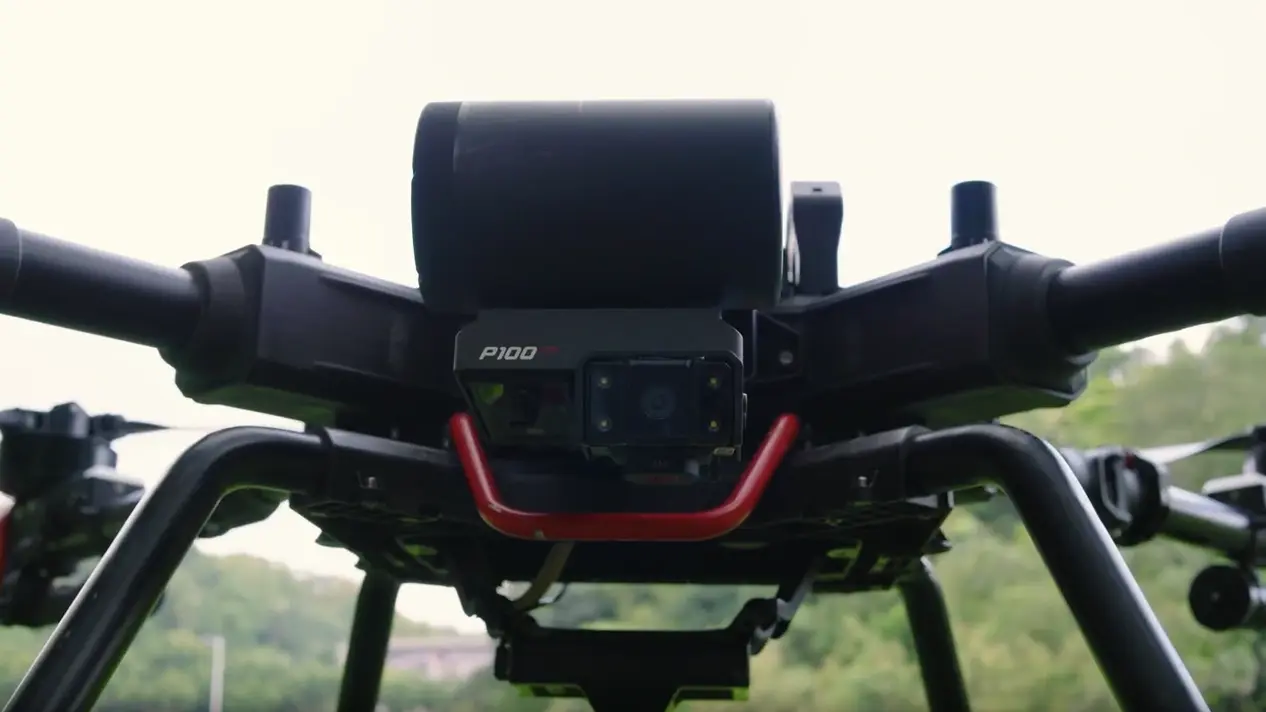
Commercial satellites typically resolve to 3–10 metres per pixel. A drone-mounted multispectral sensor flying at 50–100 metres altitude achieves sub-5cm resolution. That's the difference between seeing a field as a rough patchwork and seeing individual variation within tramline widths.
The data outputs matter: NDVI maps for early-season biomass, NDRE (Normalised Difference Red Edge) for more accurate chlorophyll and nitrogen status assessment after canopy closure at GS30, canopy density mapping, and early stress detection. Using this multispectral data to create variable rate application maps can reduce fertiliser usage by 15–20% — potentially saving hundreds of pounds per field at scale.
But here's what's interesting about this step. The drone doesn't necessarily apply the nitrogen itself — the map drives the spreader or informs the agronomist. However, a drone that does both — surveys and then applies — compresses the entire workflow dramatically. Which brings us to Way 4.
The practical reality for most UK growers
Buying a multispectral drone such as a DJI Mavic 3 Multispectral costs £5,000–£8,000. Processing software is additional. Obtaining CAA operational authorisation for commercial use takes months and requires ongoing competence maintenance.
For most arable businesses, commissioning a drone survey from a professional operator — who arrives, flies, processes, and hands over an actionable map — is faster, cheaper per use, and carries zero liability. Drone Spraying UK's crop survey services deliver exactly this: a processed, agronomist-ready output without the technical overhead.
Way 4 — Commission Precision Drone Application Directly
From map to application in a single visit
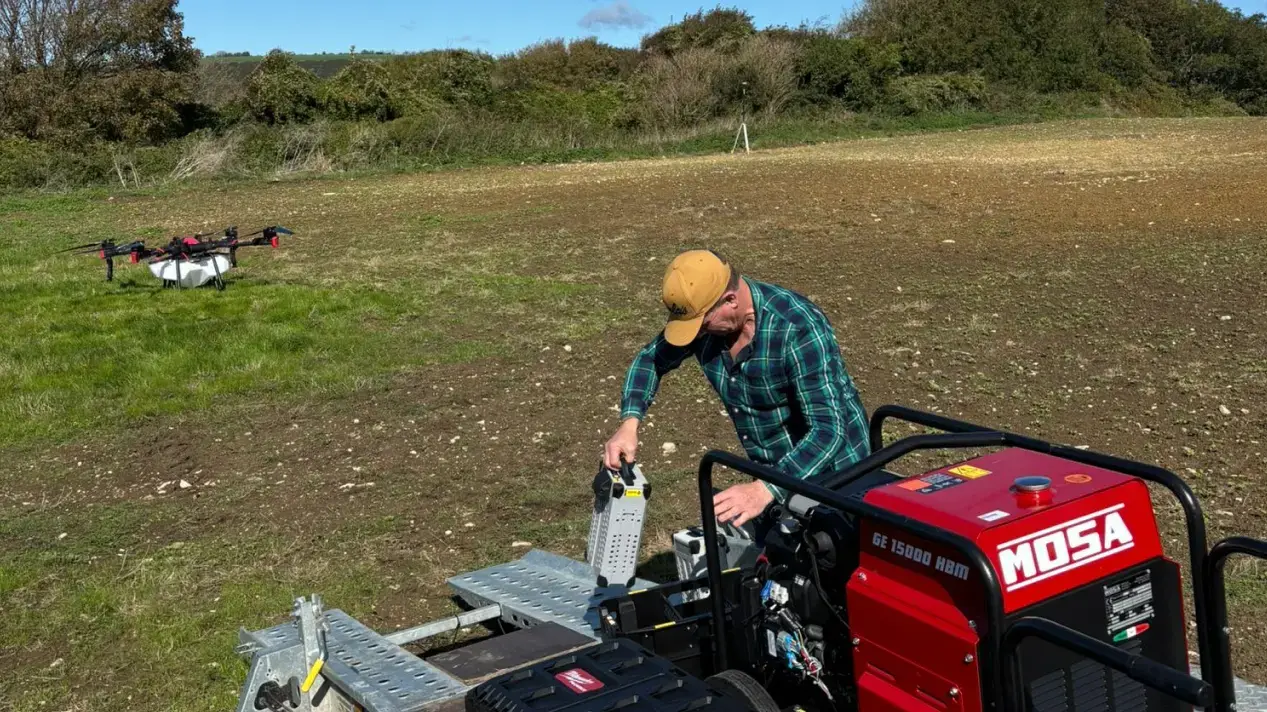
The most efficient workflow isn't "get a map, wait a week, then send a spreader." It's a drone that carries both the imaging capability and the payload — surveying and treating in rapid sequence.
The DJI Agras T50 carries a 40 kg payload with a 9-metre spray width, AI-powered obstacle avoidance, and variable rate application linked to RTK GPS. It covers 40–50 hectares per hour at operational speed. The DJI Agras T40 handles 50 kg spreading payloads for dry fertiliser — particularly relevant for top-dressing granular AN or liquid UAN with GPS-guided variable rate control built in.
For UK arable, drone application of fertiliser (both liquid and granular) is approved under current CAA frameworks. It doesn't require the Special Category permissions needed for pesticide application. That's an important distinction many growers aren't aware of.
The CAA position — what's approved and what isn't
Operators must hold appropriate CAA authorisation for aerial application in UK airspace. This involves the General Visual Certificate (GVC) as a minimum, plus specific operational authorisations for agricultural work — a process that typically takes several months and requires ongoing logbook and competence records.
This is precisely the kind of precision application that Drone Spraying UK delivers on behalf of UK arable farmers. No capital investment, no CAA authorisation burden, no equipment downtime. You specify the nitrogen target and the field. The team arrives with a DJI Agras T50 or T40, applies to your variable rate prescription, and you receive a full application record for your agronomic file.
It's the fastest route from an N map to a treated field currently available to UK growers. To find out if your land and crop programme are a good fit, speak to the team directly.
Way 5 — Reduce Application Passes and Machinery Costs With Drone Top-Dressing
The hidden cost most arable budgets ignore
You're probably thinking about fertiliser cost purely as "price per tonne times tonnes bought." But the application cost is significant too — and it's where most budgets have a blind spot.
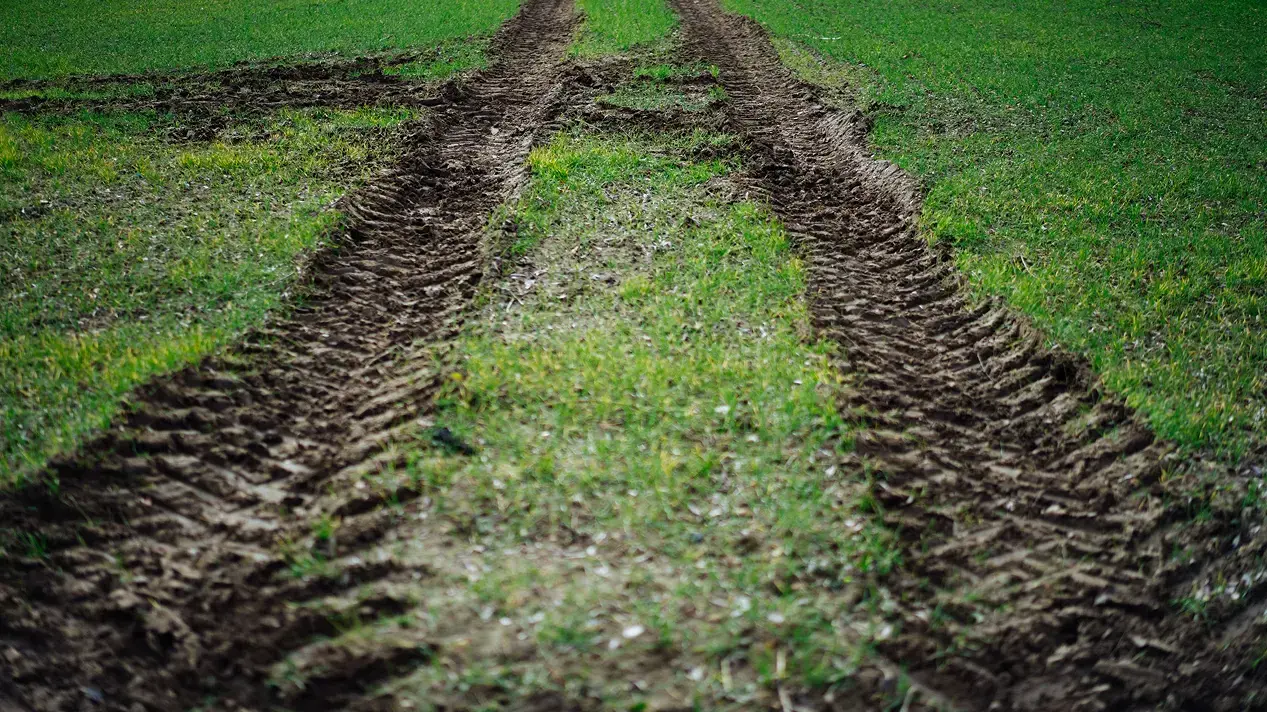
Tractor-plus-spreader operating cost per pass includes fuel, wear, labour, and soil compaction. AHDB data shows compaction can reduce yield by 5–15% on susceptible soils. A wet spring 2026 — and much of the Midlands and East Anglia has had exactly that — means many fields that would normally carry a spreader simply can't.
Drones avoid this entirely. A DJI Agras T50 weighs under 50 kg loaded. No wheelings, no ruts, no compaction penalty. It flies regardless of field trafficability.
The late-application risk and what it costs
Timing matters more than rate precision in some seasons. AHDB data shows that delayed nitrogen application to winter wheat at GS30–32 can reduce uptake efficiency significantly. Each week past the optimal window costs real yield.
Drones can operate in conditions — early morning, light wind, immediately post-rain — where tractors physically cannot access the field. In Lincolnshire and East Anglia, two of the UK's most productive arable regions, wet springs regularly push fertiliser applications into sub-optimal timing windows. Drone application closes that gap.
Combining Way 3 + Way 5 — the "scout and treat" model
The most advanced operators now offer a combined service: a pre-season multispectral survey to generate VRA maps, followed by precision drone application of the prescription. This compresses the workflow from four steps (survey, process, prescribe, apply) into two — and it's the workflow that achieves the headline fertiliser savings cited throughout this post. Drone Spraying UK's coverage area includes the key arable regions where this combined approach delivers the strongest returns.
Real UK Numbers From a Drone-Assisted Wheat System
What actually happened on a Northamptonshire wheat farm
Here's where the theory meets the combine hopper. A wheat grower in Northamptonshire worked with an agronomist to measure Green Area Index (GAI) using a drone early in the season, combined with a Soil Mineral Nitrogen test, to calculate the precise nitrogen requirement for each field.
The results were striking. Nitrogen savings ranged from 58–69 kg N/ha — sizeable by any measure. The highest yield recorded was 9.4 t/ha, with an average of 8.25 t/ha. That's a strong result given the scale of the fertiliser reduction achieved. The approach also delivered 200–250 kg of CO₂ equivalent savings per hectare.
Now let's recalculate that saving at April 2026 prices. If AN is ~£475/t at 34.5% N, then 1 kg of applied nitrogen costs approximately £1.38. Saving 60 kg N/ha = roughly £83 per hectare. On a 200-hectare wheat block, that's £16,600 saved in a single season — with no yield penalty.
That was achieved using drone imaging for the survey component alone. Adding precision drone application on top of that data — the kind of engagement Drone Spraying UK provides for fertiliser spreading — layers application accuracy onto the agronomic prescription.
The Revesby Estate evidence (Lincolnshire, Harvest 2025)
The Agrii Digital Technology Farm trial at Revesby Estate combined drone imagery with satellite data to build higher-resolution nitrogen rate maps. The results on lighter soils showed 70% nitrogen use efficiency with 37% less N spend, contributing to a 26% higher gross margin compared to the farm's standard approach.
Revesby is a high-performing Lincolnshire arable estate — not a controlled trial farm. This is commercial-scale evidence from real UK conditions.
The FETF 2026 grant — why it doesn't change the hire calculation
The Farming Equipment and Technology Fund (FETF) 2026 includes drones for applying fertiliser or seed, funded at 50% of the expected average cost of £30,135 — a grant of up to £15,067.
But here's the full picture. A grower farming 300 hectares who purchases their own agricultural drone would spend roughly £15,000 after the grant. Then add: CAA GVC training (£1,500–£2,500), operational authorisation preparation (2–4 months minimum), insurance (£2,000–£4,000/year), battery replacements, software subscriptions, and the time cost of the farmer or farm manager becoming a competent pilot.
Contrast that with hiring a precision drone operator for fertiliser application on 300 hectares per season — a fraction of the capital pathway, with zero licensing burden, zero downtime risk, and a fully insured, CAA-authorised team.
The FETF grant is genuinely useful for the right farm business. But for most growers focused on next season's margin, the hire route is faster, lower-risk, and equally effective.
A Quick Comparison — What Each Method Saves
| Method | Estimated N Saving | Setup Cost | Time to Benefit | UK Evidence |
|---|---|---|---|---|
| SMN Testing + RB209 recalibration | 10–30 kg N/ha | £10–20/sample | Immediate | AHDB/ADAS |
| Variable Rate Application (VRA) | 20–50 kg N/ha | Machinery upgrade or hire | 1 season | Revesby Estate 2025 |
| Drone Multispectral Survey + VRA maps | 15–20% total input reduction | Survey fee or hire | Same season | Northants case study |
| Drone Precision Application | 10–30% application waste reduction | Zero if hired | Same season | Northants / Revesby |
| Avoid compaction / delayed application | 5–15% yield protection | Operational change | Immediate | AHDB soil compaction data |
Frequently Asked Questions
Can drones apply nitrogen fertiliser legally in the UK?
Yes. Both liquid (UAN) and granular fertiliser applications are approved for drone delivery under current CAA frameworks for agricultural use. This is distinct from pesticide application, which requires additional Special Category permissions. Operators must hold appropriate CAA operational authorisation.
What size farm makes drone fertiliser application cost-effective?
From approximately 20 hectares upwards, precision drone application is typically competitive with — or cheaper than — ground spreading when you factor in tramline loss, compaction costs, and timing risk on wet soils.
Is NDVI useful for all UK crops?
NDVI is most reliable during the vegetative phase. After GS30 in cereals, when canopy closure begins, NDRE indices provide more accurate nitrogen status assessment. A professional operator will select the appropriate index for your crop and growth stage.
Does drone application damage standing crops?
No. The downwash from agricultural drones like the DJI Agras T50 is calibrated for crop canopy penetration, not flattening. Ground pressure is effectively zero — which is the entire point compared to a tractor and spreader.
The Bottom Line for 2026
Five levers. Each one backed by UK evidence. Start with the soil: an SMN test costs less than a pub lunch and can save £30–60/ha overnight. Recalibrate your RB209 figures for 2026 prices — the economic optimum has shifted. Move to variable rate application where your fields show genuine variability — the Revesby data shows the margin impact is real. Use drone multispectral imaging to build precision N maps that expose what satellites miss. And commission drone application to eliminate the compaction, timing, and waste penalties that ground-based spreading carries in a wet year.
Fertiliser prices are 13–36% higher than February. UK CBAM is nine months away. The growers who close the NUE gap this season will carry a structural cost advantage into 2027 that their neighbours won't.
If any part of your 2026 rotation involves top-dressing wheat, OSR, or spring cereals — particularly across fields with known variability or trafficability issues — it's worth finding out whether drone application could deploy in your area. The team works with UK arable farmers and can advise on whether your fields, crop programme, and target products are a good fit for precision drone application. No obligation — just a practical conversation about whether the numbers stack up for your farm.
Ready to see what drone application could do for your operation? See our services or get in touch to request a site assessment.