You've probably noticed the pattern by now.
Every spring, just as you're getting ready to put nitrogen on, something happens somewhere in the world and suddenly the price list your merchant sent on Monday isn't worth the paper it's printed on by Tuesday afternoon.
This spring is no different. In fact, it might be worse. Middle East disruption, gas price spikes, CBAM uncertainty - fertiliser traders are reportedly issuing new price lists by the hour at the moment, with some products up £60 to £70 a tonne in the space of a single week.
Urea is sitting at around £424/t. Ammonium nitrate isn't far behind. And if the Strait of Hormuz situation deteriorates further, industry voices are warning prices could approach £500+ per tonne during the spreading season.
Meanwhile, red diesel has spiked to around 108p per litre right in the middle of the most fuel-intensive period in the farming calendar.
Here's what most people don't realise, though. The answer to "how to save money on fertiliser and fuel" isn't just about buying smarter or timing the market better. A growing number of arable farmers are quietly finding that drone technology is changing the maths on input costs in ways that would have seemed far-fetched five years ago.
Let's get into it.
1. Spread only what's needed: How Variable Rate Application with Drones Save up to 15% on Fertiliser Use
Here's an uncomfortable truth about blanket fertiliser spreading: your crop isn't uniform. Not even close.
Every arable farmer knows this instinctively. The headland that sulks, the rise that drains too fast, the hollow that waterlogged in October and never quite recovered. But knowing it and doing something about it are two very different things when you're sat in a tractor cab. You put the same rate down everywhere because that's the only practical option. The end result? Parts of your field get exactly what they need, parts get too little, and parts get more than they'll ever use.
That last category is where your money quietly disappears.
This is where the combination of a DJI Mavic 3 Multispectral survey drone and an efficient variable rate spraying drone changes the game entirely. The Mavic 3 Multispectral carries five dedicated multispectral sensors alongside its RGB camera capturing Green, Red, Red Edge and Near-Infrared bands with RTK-level positioning accuracy. In plain English: it builds a precise, centimetre-accurate map of crop vigour and nutrient stress across your whole field in a single flight, at a fraction of the cost and time of traditional soil sampling grids.
What it produces is an NDVI (Normalised Difference Vegetation Index) map showing exactly where your crop is thriving, where it's struggling, and where it genuinely doesn't need what you're about to give it.
From Drone Survey Data to Prescription Maps
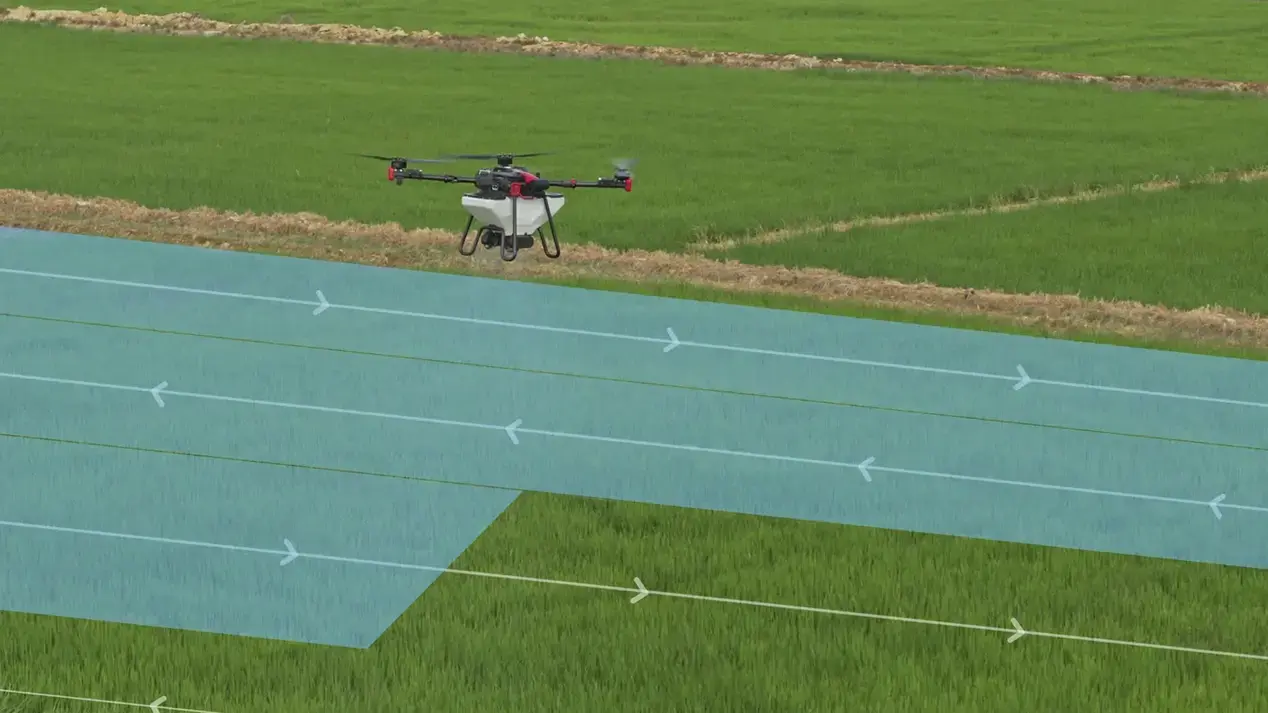
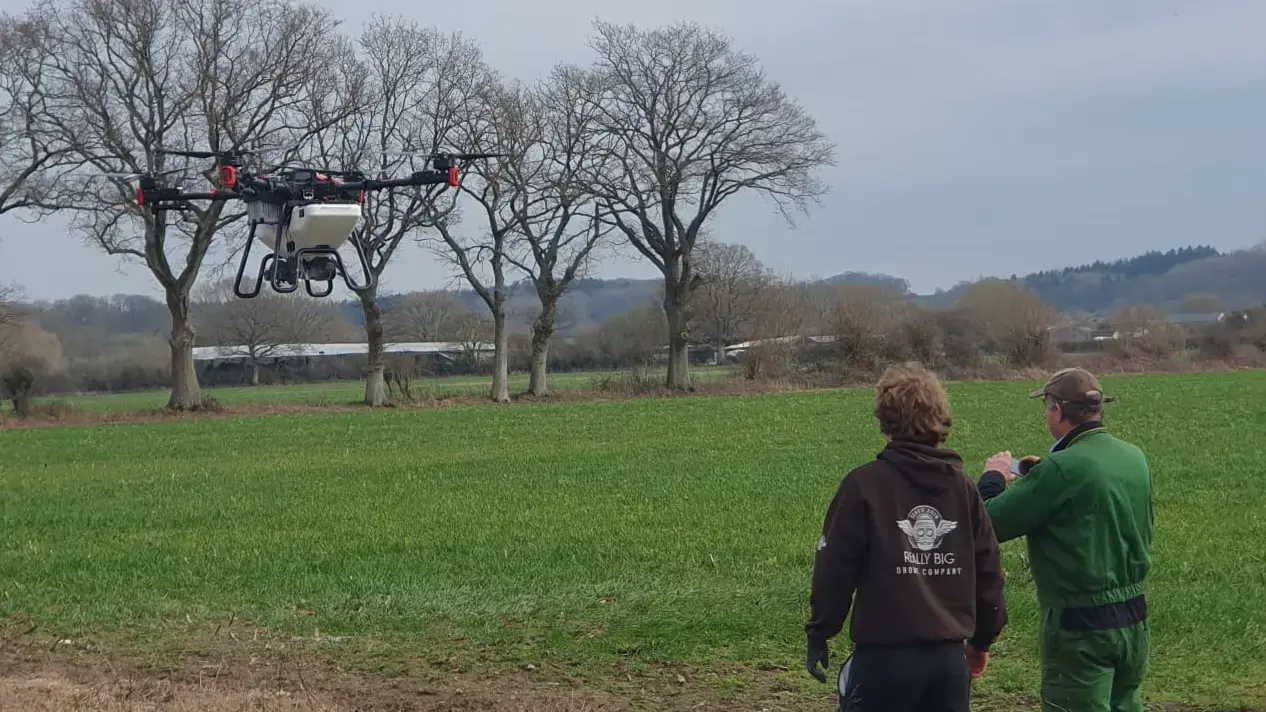
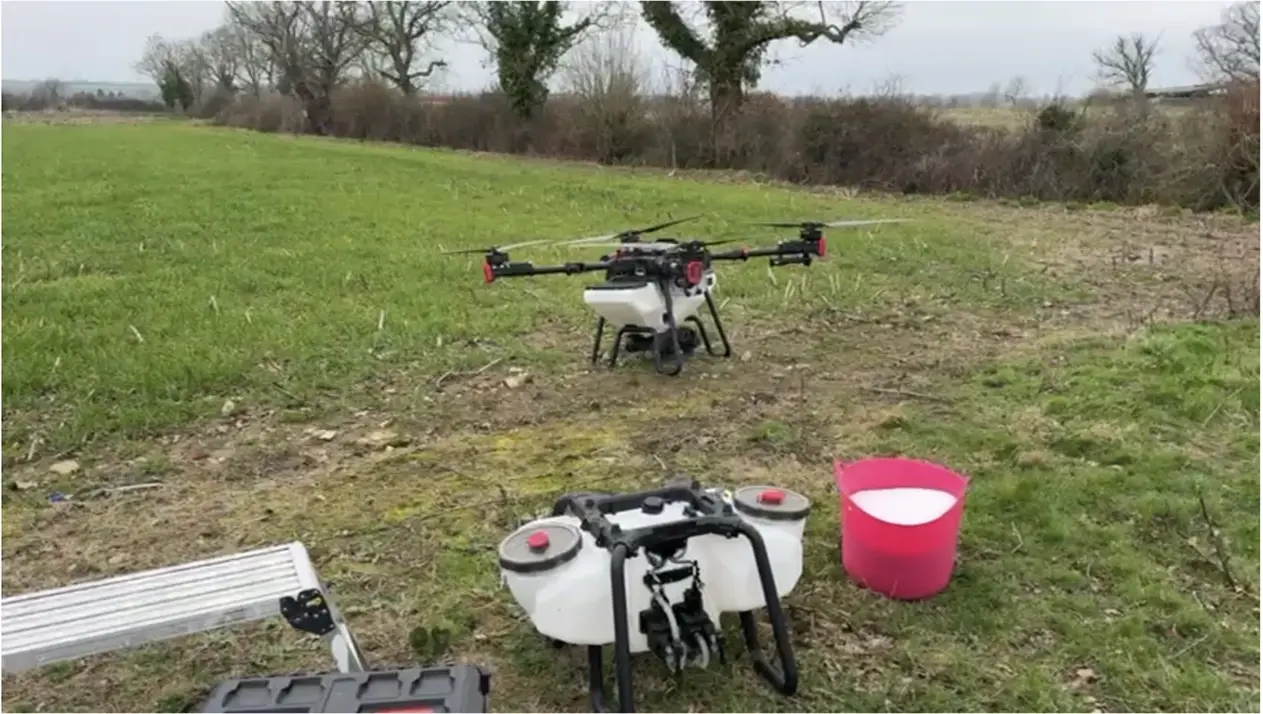
That data then feeds directly into a prescription map for a spraying drone. The DJI Agras T100 - with its 100-litre spray tank and intelligent flow control system - executes that prescription in real time, varying the application rate automatically as it flies. More where the crop needs it, less where it doesn't. The XAG P100 Pro works similarly: AI-based navigation, centimetre-level accuracy for granular spreading.
You're probably thinking: "Sounds clever - but what does it actually save?"
From our own operations and across the drone world, we've seen between 5 to 15% savings in fertiliser use through variable rate approaches. Drones are extremely efficient at applying product in exactly the right place.
Let's put that in March 2026 context. If you're running urea at £424/t on 300 hectares, a conservative 10% reduction in applied volume doesn't just save you money this season - at today's prices, it's a meaningful five figure saving. And critically, you're not compromising yield, because the crop areas that needed more got more.
The Mavic 3 Multispectral does the diagnosis. The Agras T100 or XAG P100 Pro executes the prescription. The result is precision that a ground spreader, however good, physically cannot replicate.
Use up to 15% less Fertiliser this Spring with Drones
Protect your margins from global headwinds with precision drone technology. We'll consult with you to find the best solution for your needs.
2. How drones Reduce Fuel Consumption by up to 50%
Let's talk about the other cost that's quietly strangling margins right now.
Red diesel at 108p per litre. Farmers running 2500 litres a week during spring suddenly looking at a 20p+ per litre premium they hadn't budgeted for.
Now think about what fertiliser spreading actually looks like from a fuel perspective. A tractor with a mounted spreader covers ground quickly, yes. But it's also dragging a significant machine weight across your field on every pass compacting crop and wasting diesel. The more passes, the more fuel burned. The longer diesel remains at 108p a litre, the more it hurts.
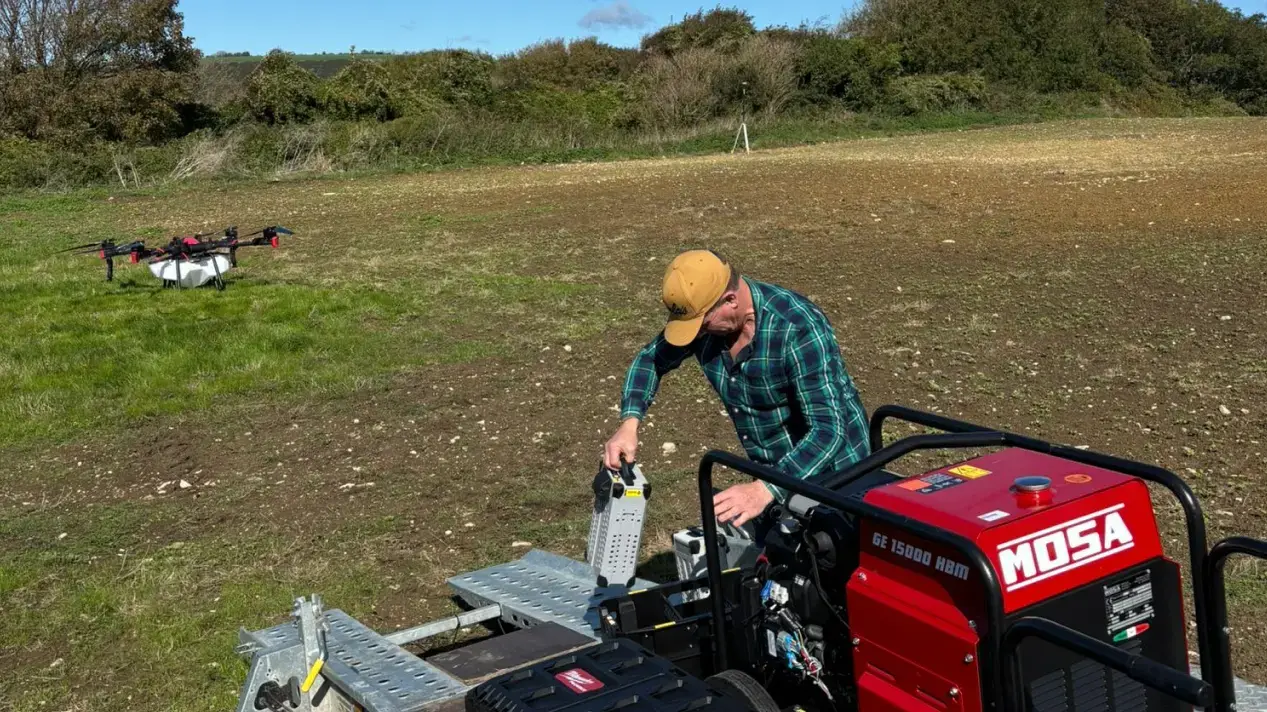
A drone like the Agras T100 carries a 100-litre payload at up to 20 metres per second. It doesn't run on red diesel. It runs on batteries - recharged quickly on the headland from a single generator, not at a fuel bowser.
The fuel cost comparison isn't even close. The direct operating cost of electric drone flight per hectare covered is a fraction of what a diesel-powered machine spends before it even leaves the yard. And when red diesel prices spike the drone's electricity cost doesn't move with it.
The Compound Fuel Saving Nobody Talks About
There's a second fuel saving that's easy to overlook. One that actually compounds the benefit.
Traditional fertiliser spreading requires multiple field passes, re-fill runs and often separate passes for different products and timings. Each pass means a tractor burning diesel from the moment you leave the yard to the moment you return. A drone, operating autonomously to a pre-loaded prescription map, covers the same task in fewer equivalent passes, and can be deployed more precisely to the areas that actually need treating.
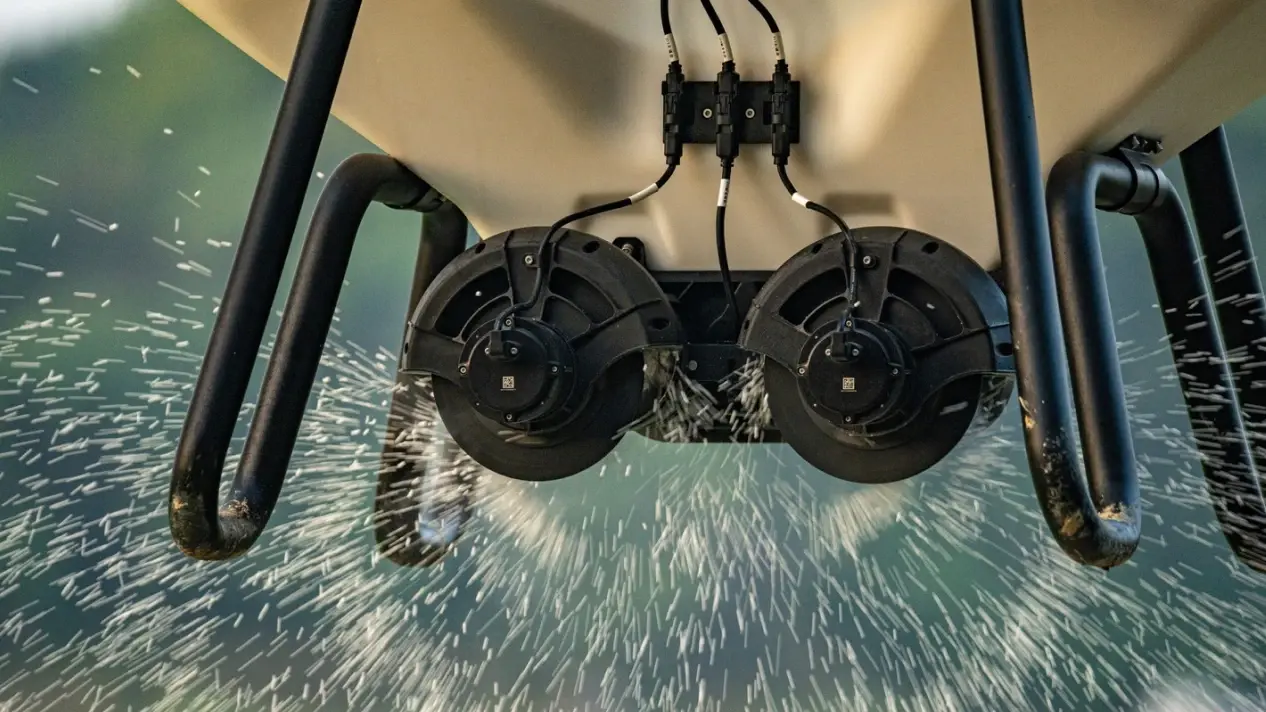
And when your multispectral analysis data tells you that the western half of field 7 doesn't need a second nitrogen pass this season? You simply don't fly it. Try exercising that kind of surgical restraint with your regular tractor spreader.
3. The benefit of no Crop & Soil Compaction
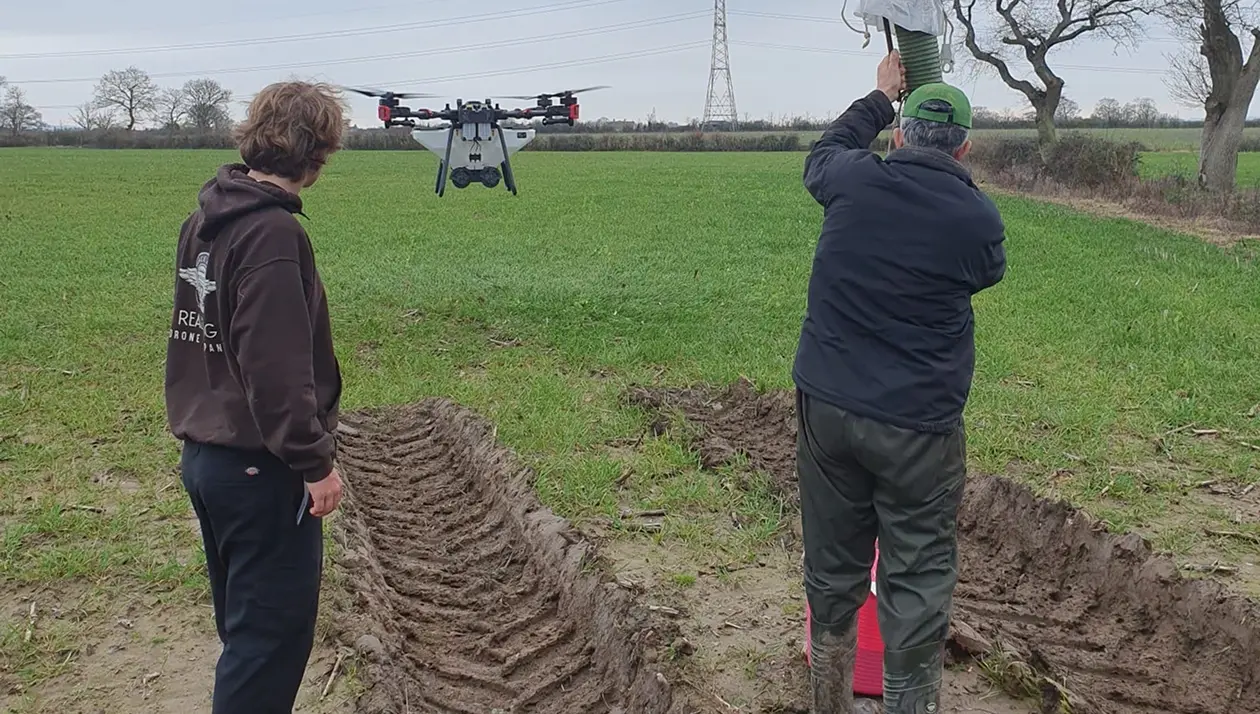
No one wants tramlines like this in their field!
Almost every arable farmer knows the compaction problem, almost everyone has some degree of it, and almost nobody accounts for the full financial cost it's silently adding to every season.
- ADAS research puts gross margin losses from compaction at between £600 and £1,200 per hectare.
- Harper Adams research found that compaction reduces nitrogen recovery by around 15% meaning that even the fertiliser you do apply isn't being taken up as efficiently as it should be.
- UK-wide, soil degradation from compaction and organic matter loss has been estimated to cost UK farming £1.2 to £1.4 billion every year.
That's a structural drag on profitability that sits underneath every conversation about fertiliser prices and fuel costs.
And the cause? Overwhelmingly, it's wheel traffic. Research consistently shows that conventional arable rotations traffic more than 70% of the field across a season. The first pass alone causes 85 to 90% of compaction. After that, you're repeatedly travelling over damaged soil, reducing its ability to hold nutrients, drain water, and support root development.
We'll help you reduce soil compaction - see our Drone Survey & Variable Application Offer
If you're ready to see how drones can unlock healthier soil and compact less of your newly planted crops, we'll show you how.
Zero Wheels. Zero New Compaction.
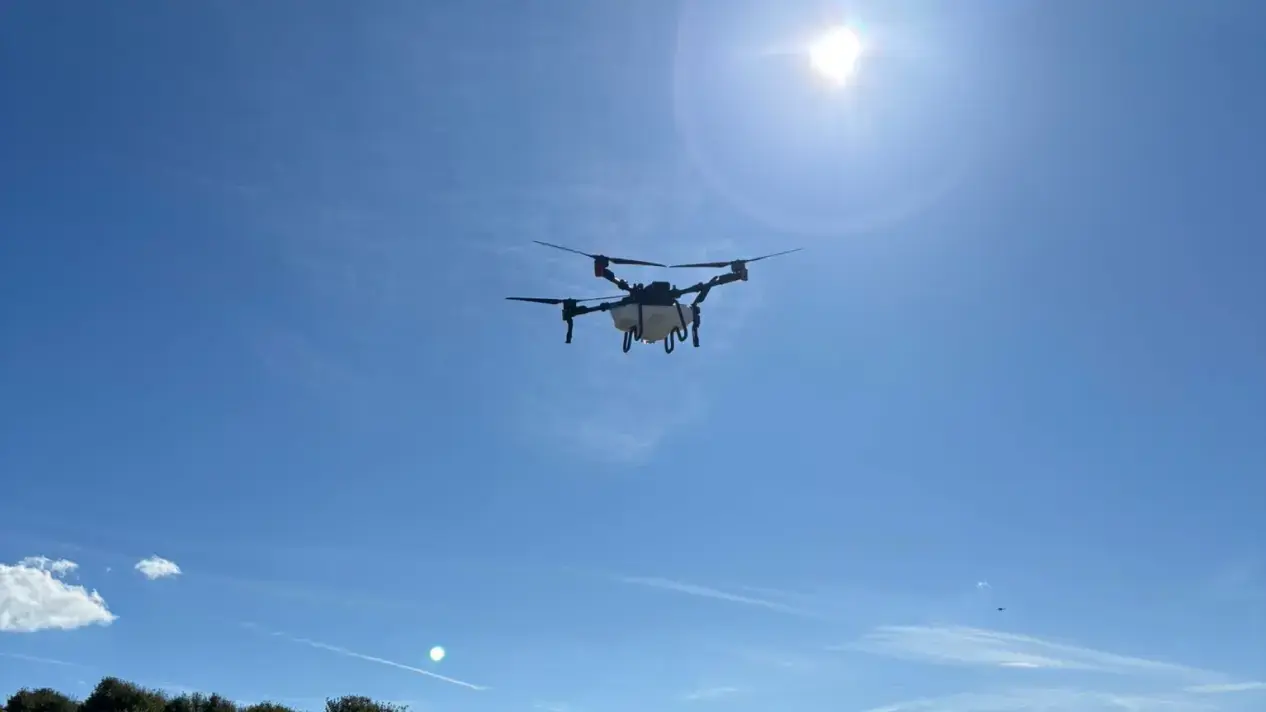
Here's where drones offer something genuinely different -not just incrementally better, but categorically different.
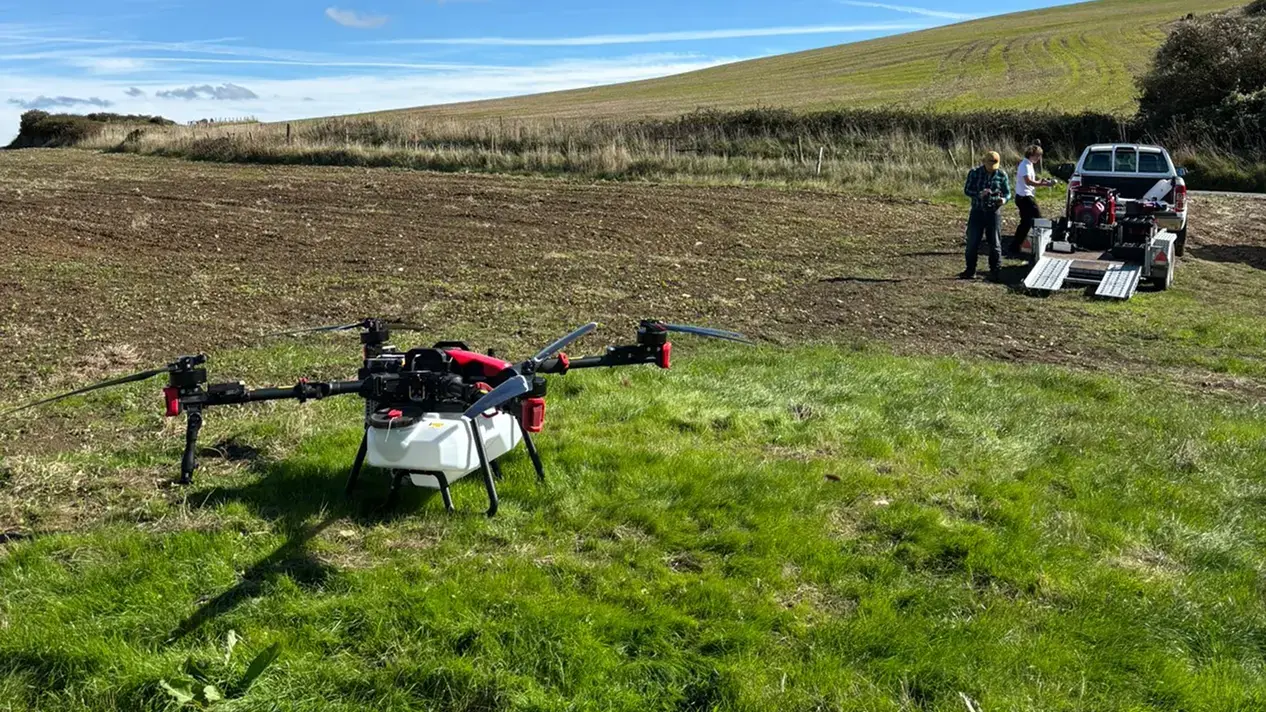
A drone like the Agras T100 or XAG P100 Pro (pictured above) applies inputs from the air. Its rotors create a downward airflow that actually aids canopy penetration of granules. And most importantly, it doesn't have tyres.
Zero wheel contact. Zero new compaction. Zero contribution to the cycle of soil damage that compounds with every season.
Think about that in terms of the nitrogen efficiency point above. When Harper Adams found 15% better nitrogen recovery in non-trafficked soils, they were describing exactly what happens when the machine applying your fertiliser doesn't simultaneously damage the soil's ability to absorb and process it.
You're spending £424 per tonne on ammonium nitrate. Then a heavy spreader drives over your field not only damaging the new crop but also contributing to soil compaction and long term damage.
A drone breaks that cycle completely. It surveys from the air. It applies from the air. And it lands back on the headland without ever putting a wheel on a seedbed. No pan formation, no subsoil stress, no water infiltration problems building quietly for next season.
The DJI Mavic 3 Multispectral's survey flight alone can replace multiple soil-sampling passes and field walkabouts. That's fewer vehicles, fewer wheels, and less compaction created in the data-gathering phase before you've even started applying anything.
Bringing It Together: What This Means for Your Farm in 2026
Fertiliser prices are moving again. Red diesel has spiked at the worst possible time. And every season that passes without addressing compaction is a season that quietly erodes the return you get from every tonne of input you apply.
The three things drones do: survey precisely and prescribe variable rate applications, operate without diesel, and apply inputs without adding to compaction aren't three separate niche benefits. They're three compounding advantages that all point in the same direction: more of your input spend actually doing what you paid for it to do.
- Variable rate technology means the right amount of fertiliser going to the right part of the field saving you up to 15% on fertiliser inputs.
- Battery-powered flight means your farm remains more independent from rising fuel cost protecting your margins.
- No wheel traffic stop compacting new crop with heavy tractors and ensure your soil stays healthier.
If you're already thinking about how to use less fertiliser on fields without compromising yield, or looking at smarter ways to manage fuel costs through the season, drone-assisted precision agriculture is worth understanding properly before the next spreading window arrives.