Cover cropping in the UK means establishing a mix of non-cash crops between harvest and the following cash crop, primarily to protect and rebuild soil structure over winter. Under the Sustainable Farming Incentive, actions CSAM2 and SOH3 pay farmers for doing this - but only if the crop is established within a defined seasonal window, which conventional drilling on wet or trafficked post-harvest soils frequently cannot guarantee.
On 100 hectares, CSAM2 and SOH3 together are worth up to £29,200 in a single year. Over a standard three-year SFI agreement, CSAM2 alone returns £38,700. Stack a couple of compatible soil health actions alongside it and you're approaching £250 - £300 per hectare annually in SFI income - before a single grain goes to market.
Most farmers reading this already know cover cropping is on the table. Most have sat through at least one Groundswell talk or AHDB field day where someone made a compelling case for it. And yet, every September, the same thing happens: the combine is still running, August delivered its usual weather, the fields are carrying moisture, and the establishment window - the one that qualifies you for payment - quietly closes.
The agronomy has never been the obstacle. The machinery bottleneck is. And that's the conversation the entire cover cropping world has been avoiding.
What SFI Actually Pays for Cover Crops
Before getting into why the window keeps getting missed, it's worth being precise about the numbers. "SFI pays something for cover crops" is technically true but undersells what's on the table considerably.
- CSAM2 - multi-species winter cover crop, established within the required autumn window - pays £129/ha/year.
- SOH3 - cover crops established in the June to August window on arable land - pays £163/ha/year.
These are annual payments across the agreement term. On 100 hectares, CSAM2 over three years is £38,700. SOH3 over the same period is £48,900. The costs of establishing those cover crops - seed, establishment, management - are real but modest by comparison. The return on a well-managed SFI cover crop programme is substantial, and the agronomic benefit to your soil compounds over time on top of it.
The catch - and it's the one that converts intent into frustration - is that eligibility depends on meeting the establishment criteria. And meeting the establishment criteria depends on getting seed in the ground during a window that UK conditions regularly make inaccessible to conventional machinery.
Calculate your SFI Cover Crop Income
Enter your hectare count below to see what CSAM2 or SOH3 could return over a three-year agreement.
Sustainable Farming Incentive ROI Calculator
Select a scheme, enter your hectares, and see what a three-year SFI agreement could return.
Scheme Details
Select SFI Action
No-till / direct drilling (3-year commitment)
Agreement term: 3 years
The Establishment Windows You Actually Need to Hit
This is where the published guidance tends to gloss over the practical difficulty, so it's worth being specific.
CSAM2 requires a multi-species winter cover crop established after harvest and before a defined autumn cut-off. "Multi-species" means at least three species in the mix. The crop needs to demonstrate genuine establishment - not just seed in the ground, but seedlings emerging before the qualifying period ends. On paper, straightforward. In practice, this window arrives at exactly the moment when post-harvest fields are most likely to be wet, compacted from combine traffic, and already under pressure from the following crop preparation schedule.
SOH3 is, if anything, more demanding on timing. The establishment window runs June to August - meaning cover crops must go in alongside, or immediately ahead of, main harvest activity. In a normal UK harvest sequence - which is to say an entirely abnormal one - this competes directly with everything else happening on the farm during those eight weeks.
Here's what's interesting about both windows: they're perfectly manageable if the method of establishment doesn't require ground conditions that will carry machinery. Remove that constraint and the window becomes something you plan around rather than something you hope to hit.
Why the Machinery Bottleneck Keeps Winning
The issue isn't farmer intent or agronomic knowledge. It's a timing incompatibility that no amount of planning fully resolves.
Post-harvest UK fields in September are frequently carrying moisture from whatever August delivered. A conventional drill needs ground that will carry it without causing compaction damage - and compaction in the soils you're specifically trying to rehabilitate through cover cropping is precisely the outcome you're trying to avoid. Most experienced arable farmers know this. The result is a genuine dilemma: wait for conditions to improve and risk missing the establishment window, or push the drill in and potentially undo the soil health work the cover crop is meant to deliver.
Think of it like trying to ice a cake while it's still in the oven. The conditions you need for the job and the conditions that exist at the time you need to do it are fundamentally incompatible - and no amount of intent closes that gap.
This is why farms that have been attending cover crop events for five years are still not consistently establishing them. The will is there. The window and the machinery keep failing to align. Until the method of establishment stops being constrained by ground conditions, the timing problem doesn't get solved - it just gets deferred to next season.
The same compaction risk is quietly eroding returns across the rotation on many arable farms. Read how drone application removes compaction from the equation entirely.
What Drone Seeding Does to the Timing Problem
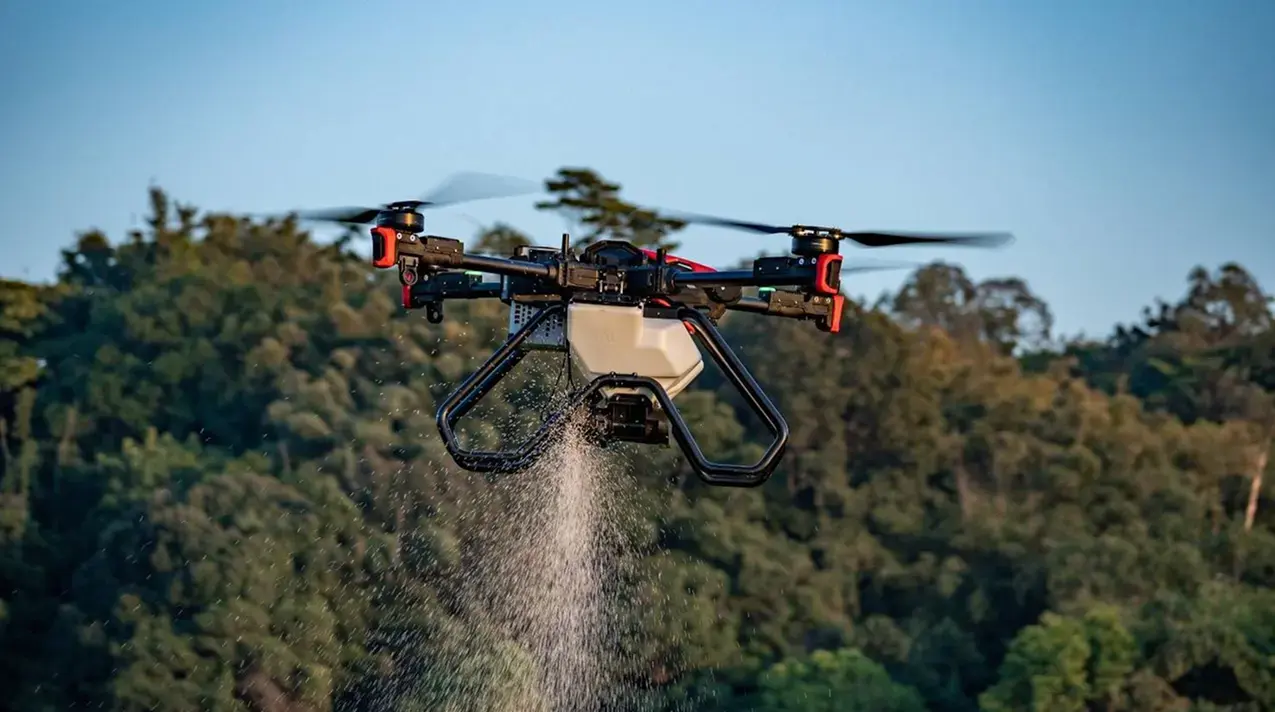
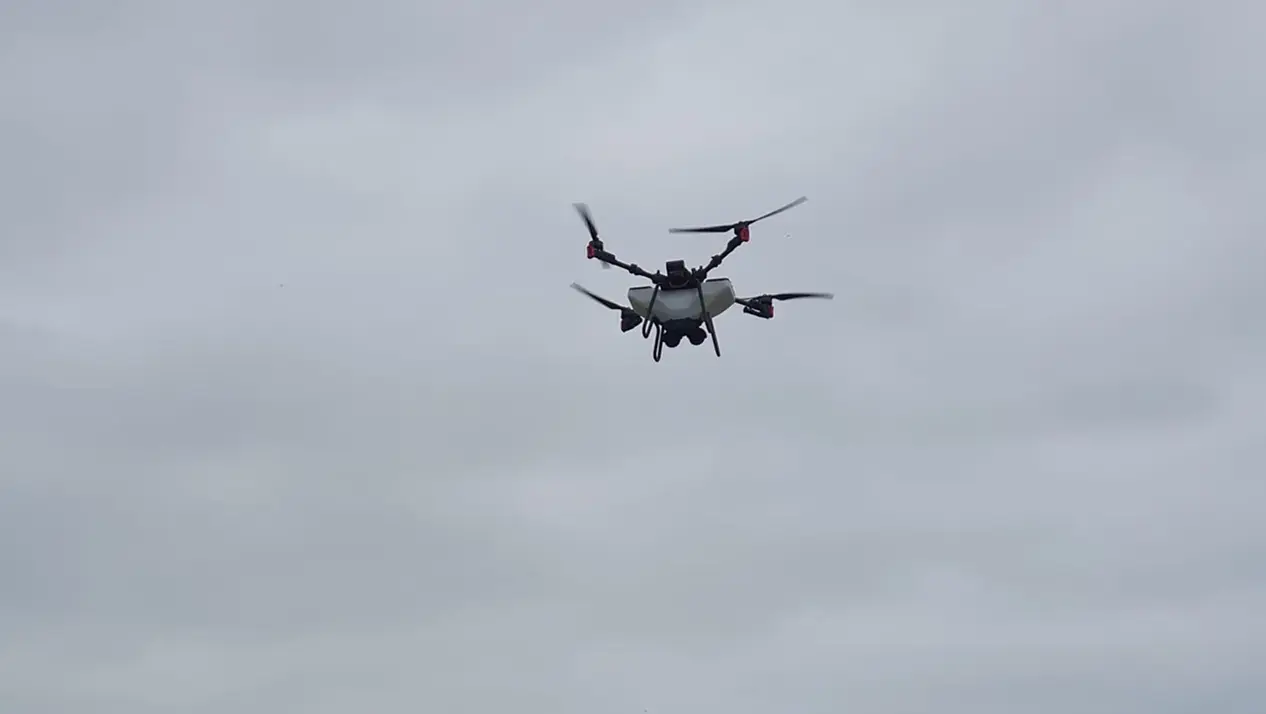
Aerial seeding with an agricultural drone changes the fundamental constraint. Nothing touches the ground except the seed - so whether the field will carry machinery becomes irrelevant.
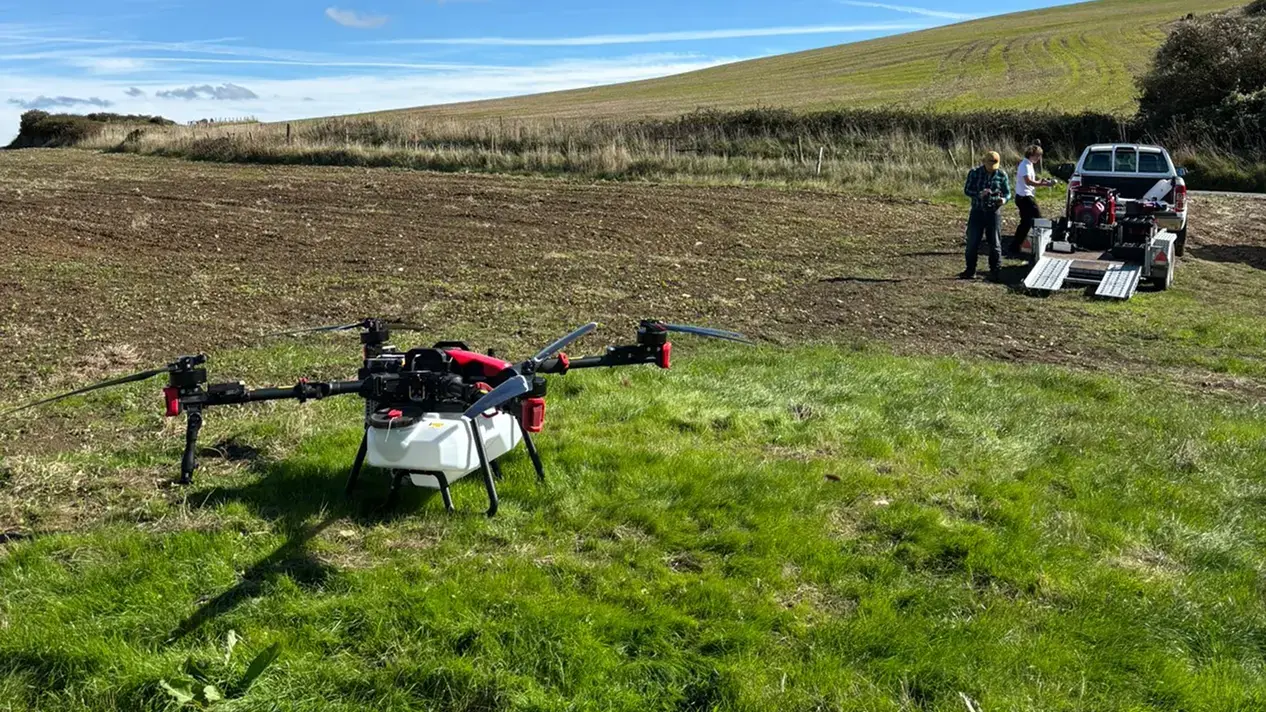
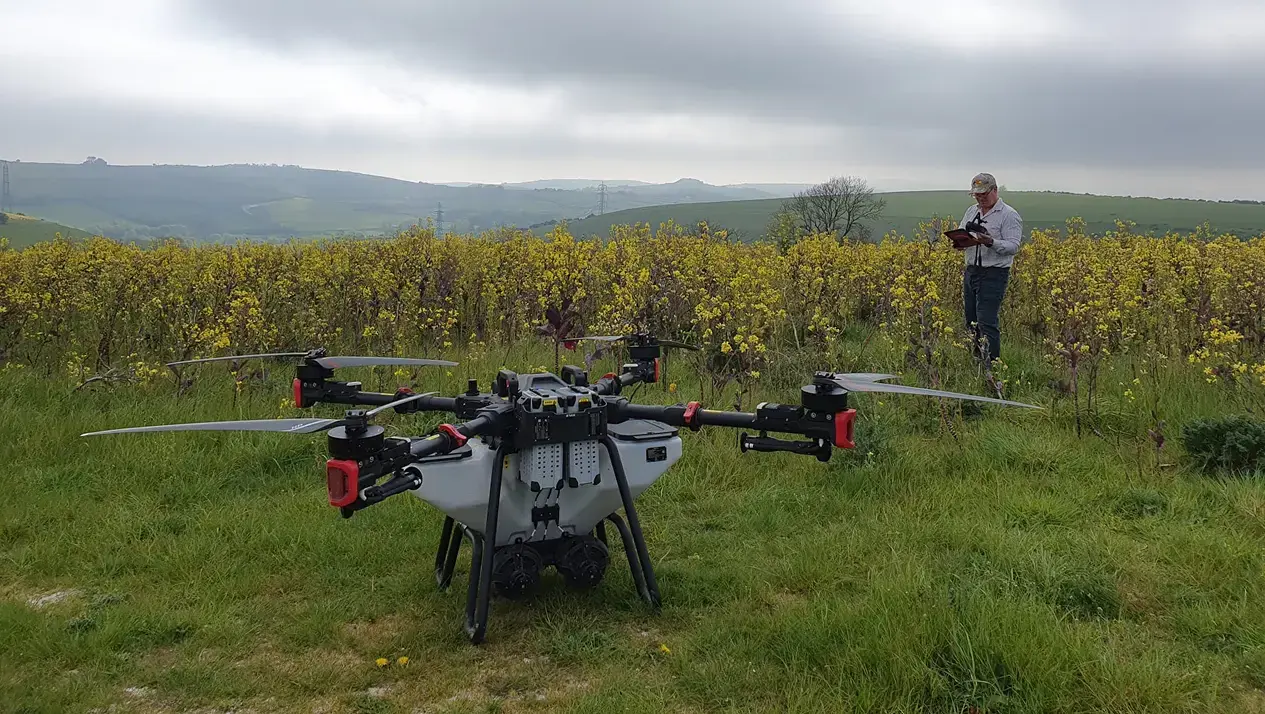
The XAG P100 Pro, the aerial seeding platform operated by Drone Spraying UK for cover crop establishment, carries an 80-litre hopper and has a takeoff weight approaching 100 kilograms. This is not a hobbyist drone that happens to carry seed - it's a serious piece of agricultural machinery that operates aerially. It can broadcast seed across a field while the combine is still working adjacent tramlines, into standing stubble, onto wet headlands, across slopes that a conventional drill would struggle with - all without a single pass of ground equipment.
For SFI compliance, the practical implication is significant. The establishment window becomes something you hit rather than something you hope to hit.
A farm with 100 hectares earmarked for CSAM2 doesn't need to wait for conditions to settle. It needs a booking, a prepared seed mix, and two or three days of flying. Coverage rates with the XAG P100 Pro make this commercially viable at field scale - this isn't a technology suited only to awkward corners and difficult parcels.
Because seed is broadcast aerially rather than mechanically incorporated, there is no soil disturbance and no compaction risk on the ground you're investing SFI income to improve. Drone Spraying UK's pilots hold full CAA operational authorisation for aerial seeding - there's nothing for the farmer to organise on the regulatory side.
Getting the Species Mix Right for SFI
Since CSAM2 requires at least three species, it's worth a moment on what actually works in UK conditions - not to relitigate the agronomy, but because a mix that doesn't establish wastes both the flight and the SFI opportunity.
The most reliable mixes for UK autumn establishment anchor around a fast-establishing brassica combined with a legume and a cereal companion:
- Brassica (phacelia, forage radish, or mustard) - fast establishment, ground cover
- Legume (winter vetch, crimson clover, or field beans) - nitrogen fixation
- Cereal (winter oats, rye, or triticale) - biomass, root structure
- Optional for SOH3 (buckwheat or linseed) - faster cycling, pollinator value
For SOH3 summer establishment, the mix shifts toward faster-cycling species that can establish, deliver meaningful soil benefit, and be terminated cleanly ahead of autumn drilling. Broadcast seeding by drone suits these mixes well - most cover crop species don't require precise drilling depth, and the variation in seed placement that aerial seeding produces closely mirrors the broadcast approach many agronomists already prefer for multi-species mixes.
A mix that establishes reliably and qualifies for CSAM2 is doing two jobs at once - improving your soil and paying you to do it.
The Full SFI Picture - What Cover Crops Unlock
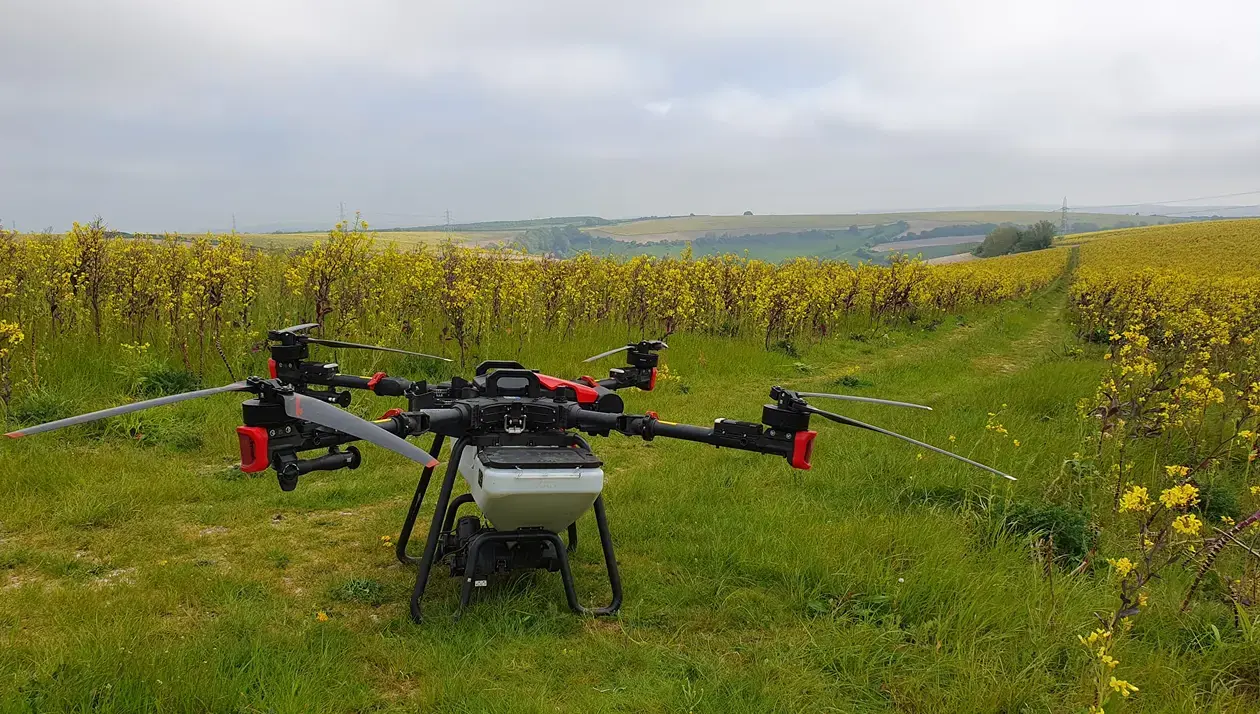
Cover crops rarely sit in isolation on a well-structured arable rotation. They're the foundation that makes other soil health actions coherent, and the SFI scheme reflects this by allowing compatible actions to run concurrently on the same land.
A realistic SFI stack on combinable arable might include:
- CSAM2 - multi-species winter cover crop - £129/ha/year
- SOH3 - summer cover crop establishment - £163/ha/year
- SOH1 - herbal leys or diverse swards - £382/ha/year
- CIPM4 - companion cropping with legumes - £55/ha/year
- CSAM1 - undersowing with clover or grasses - £64/ha/year
Not every action will sit neatly within every rotation - but a farm running CSAM2, SOH3, and a compatible companion cropping action is already looking at £347/ha annually from SFI before grain goes anywhere. On 200 hectares, that's approaching £70,000 per year in SFI income that sits entirely outside commodity price exposure.
The bottleneck to capturing this income isn't administrative. It isn't agronomic complexity. It's the same establishment timing problem it's always been.
For a broader view of how drone technology fits into a modern arable operation, our guide to drones in agriculture - uses, benefits and future trends covers the wider picture beyond cover crop establishment.
Act Before the Window Opens Again
Cover cropping is one of the better-designed parts of the SFI scheme. It pays farmers to do something that genuinely improves their soil, and it does it at rates that make the numbers work - not in a theoretical sense, but in a bank account sense.
The establishment timing problem has always been the part that goes unspoken. Post-harvest UK fields in September do not reliably cooperate with conventional drilling, and every year the window closes without the seed in the ground is a year of SFI income that doesn't come back.
Aerial seeding with the XAG P100 Pro removes that constraint entirely. When the window is open and the ground isn't, the drone doesn't care. It flies, it seeds, and the CSAM2 clock starts running.
Miss the window and the payment disappears - not just this year, but for however many seasons remain on the agreement. That's a material number on any farm of scale, and it compounds in the wrong direction.
If you're considering SFI cover crop agreements, already have one running, or simply want to understand what aerial seeding establishment would cost on your specific acreage, see our seeding and spreading service or get in touch with the team and find out what hitting the establishment window actually looks like on your farm.