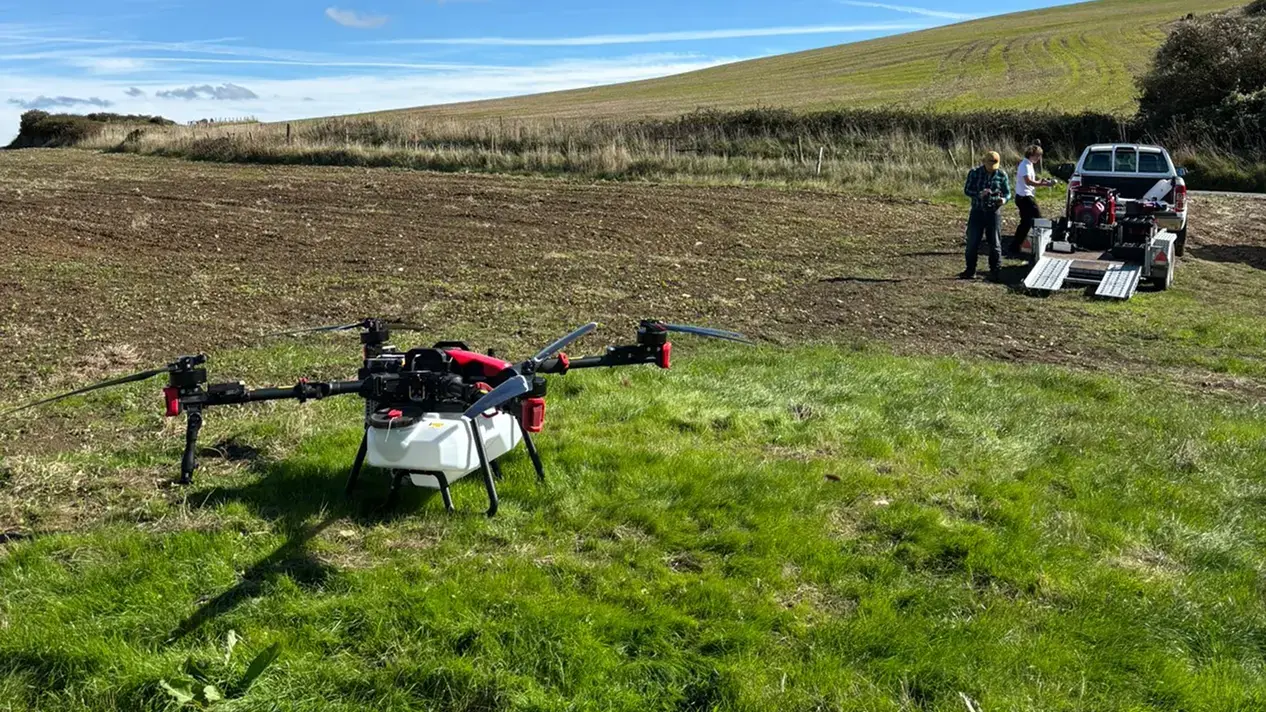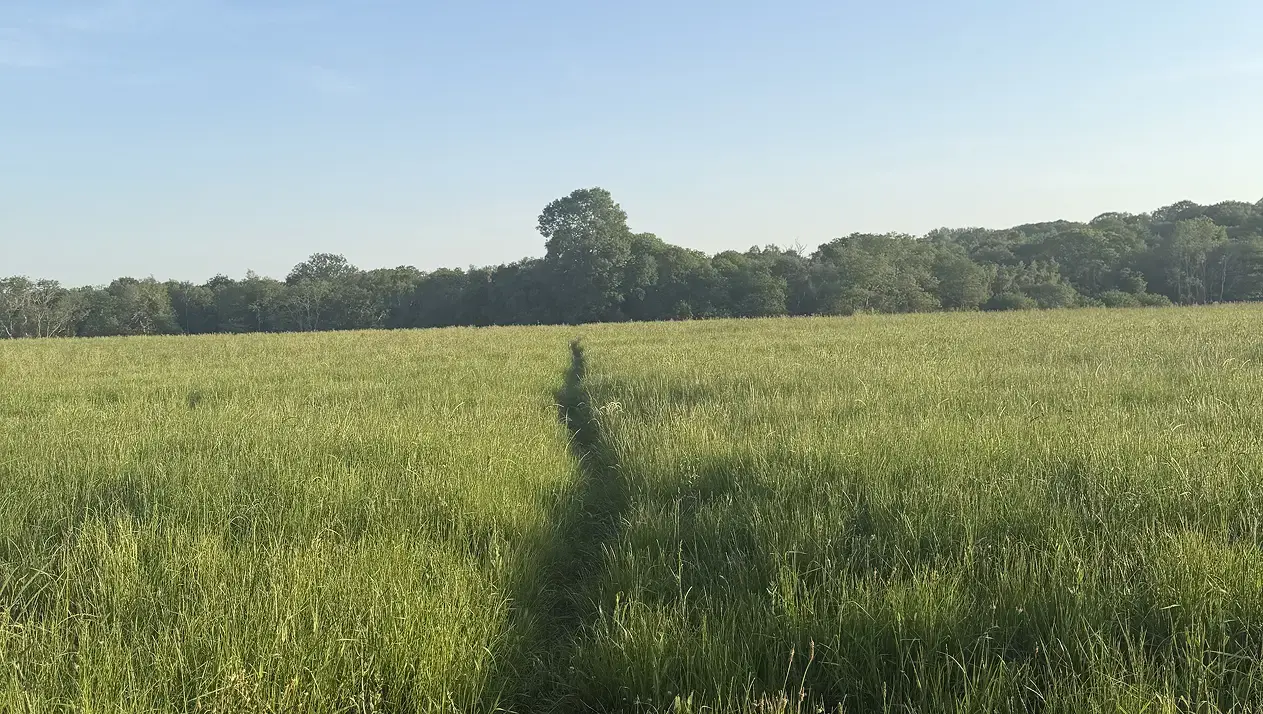
Overseeding is the practice of sowing new grass seed directly into an existing sward without ploughing or destroying the current vegetation. For UK farmers and graziers, it is the standard way to restore density to a thinning silage ley or grazing pasture after poaching, drought, or disease - without taking the field out of production.
A full reseed on worn-out pasture costs £450 to £550 per hectare and takes the field out of production for weeks. Overseeding does the same job - restoring a thinning sward, improving dry matter yield, pushing up D-value - for around £125 per hectare or less. That gap is why overseeding is one of the most cost-effective tools in grassland management, and why it tends to get overlooked until the pasture is already in trouble.
Here's what it actually is, how to know when it applies to your ground, and when it stops being the right call.
What Overseeding Actually Means
Overseeding is the practice of sowing grass seed directly into an existing sward without ploughing, cultivating, or destroying the current vegetation. The existing grass stays in place. New seed goes in on top - or into shallow slits - and establishes alongside it.
For UK farmers and graziers, the most common triggers are predictable: a wet winter that leaves visible bare patches after poaching, a dry summer that thins the sward through drought stress, or a silage ley that's simply lost density after several heavy cuts. Overseeding is the first response when the existing sward is still mostly productive - perennial ryegrass above roughly 50% coverage - but needs reinforcing rather than replacing.
Overseeding vs Reseeding: Where the Line Is
The practical distinction is simpler than it sounds. Overseeding works with what's already there; a full reseed starts from scratch.
If your sward assessment - a quick sward index evaluation, or an agronomist walk-over - shows your perennial ryegrass content is still above 50%, overseeding is likely the right tool. AHDB guidance is consistent on this: a sward with good ryegrass coverage will respond well to targeted overseeding and can extend its productive life by two to four years. Below 50%, and especially where weed grasses or docks are moving in, a full reseed becomes the more honest answer despite the cost.
The economics are fairly clear. A full reseed at £450 to £550 per hectare also carries the lost production cost of the out-of-production period. Overseeding, at £125 per hectare or below with drone application, keeps the field in use and can return meaningful dry matter improvements within a single growing season.
When to Overseed Grassland in the UK
Timing is where most overseed attempts fail or underperform. The rule of thumb: soil temperature above 7°C, consistent moisture, and no prolonged dry spell forecast within the next two weeks.
In UK conditions, that typically means an April-to-August window, with a secondary autumn window closing by late September. Wet springs in Wales, the Somerset Levels, or upland Northern England often push the window later - which is where the challenge of ground access starts to matter.
Seed mixes for UK agricultural overseeding usually centre on perennial ryegrass for grazing leys, with white clover where nitrogen fixing is a priority. Timothy and fescue blends suit silage ground where ryegrass persistence is less of a concern. Cotswold Seeds, Barenbrug, and Germinal all offer UK-adapted varieties - your agronomist or seed supplier will steer you toward the right mix for your soil type and end use.
One practical note before sowing: check residual herbicide periods if you've had recent broadleaf weed control, particularly before establishing clover. CRD labels apply regardless of delivery method.
How Seed Gets Into the Ground - and Why It Matters
For overseeding to work, the seed needs soil contact. That means getting the existing sward grazed or mown tight first, then using a slit seeder, disc harrow, or broadcast application followed by a ring roll where conditions allow.
On firm, accessible ground, a contractor with a slit seeder or drill is often the most precise option. On wet or steep ground - the fields most likely to have suffered poaching damage in the first place - getting heavy machinery on risks further compaction and surface damage at exactly the moment the soil needs to recover.
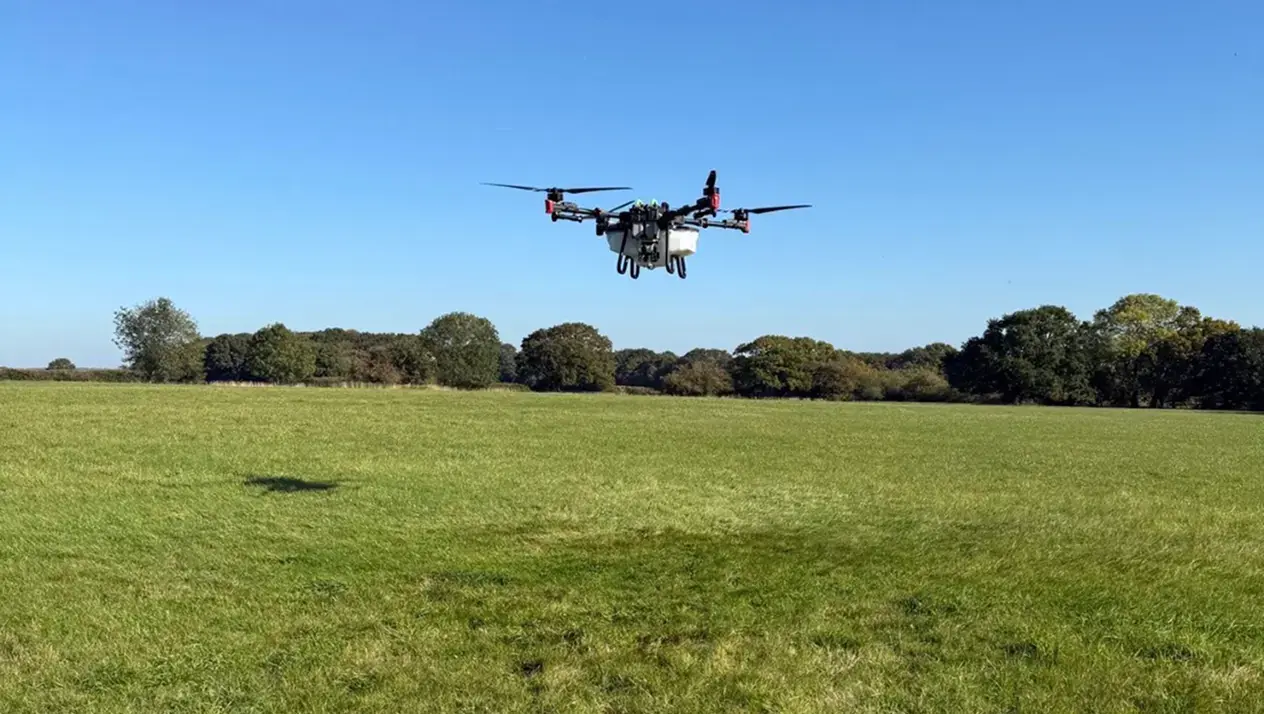
This is where aerial spreading with a drone - such as a DJI Agras T100 or XAG P100 Pro - has become a practical alternative on UK farms. There's no ground pressure, no rutting, and the seed can go down quickly within a narrow weather window when conditions finally come right. For more detail on how aerial overseeding works in practice, our guide to drone seeding covers the full process.
If you're also thinking about introducing clover into an existing sward, our post on overseeding clover into grass covers establishment timing, seed rates, and the SFI26 payment options in detail.
Is Overseeding Worth It?
For the right sward, at the right time, with good seed-to-soil contact: yes, clearly. The AHDB data on lost feed value from thinning pasture is a useful reference point - a poorly performing sward can represent a meaningful annual cost in reduced dry matter before a farmer acts on it.
The question worth asking first is whether your ground is a genuine overseeding candidate, or whether it's moved past the point where overseeding will make a real difference. That's a five-minute conversation with an agronomist, or a contractor who'll walk the field before quoting.
If your ground is too wet for machinery but the sowing window is open, Drone Spraying UK works with UK farmers in exactly that situation. Get in touch to discuss your ground and timing, or see our drone spreading page to find out more about what we offer.